Soaking Feet Is Safe When the Pedicure Is Performed Correctly
Water is not what makes a pedicure unsafe. Risk increases when a salon skips cleaning, uses the wrong disinfectant, ignores required contact time, reuses contaminated items, or performs services on compromised skin.
A controlled warm-water soak can soften hard toenails and dry skin, improve client comfort, and help a trained professional work more precisely. The key is not choosing between “wet” and “dry” as marketing labels. The key is following an appropriate protocol for the client, equipment, products, and laws in your state.
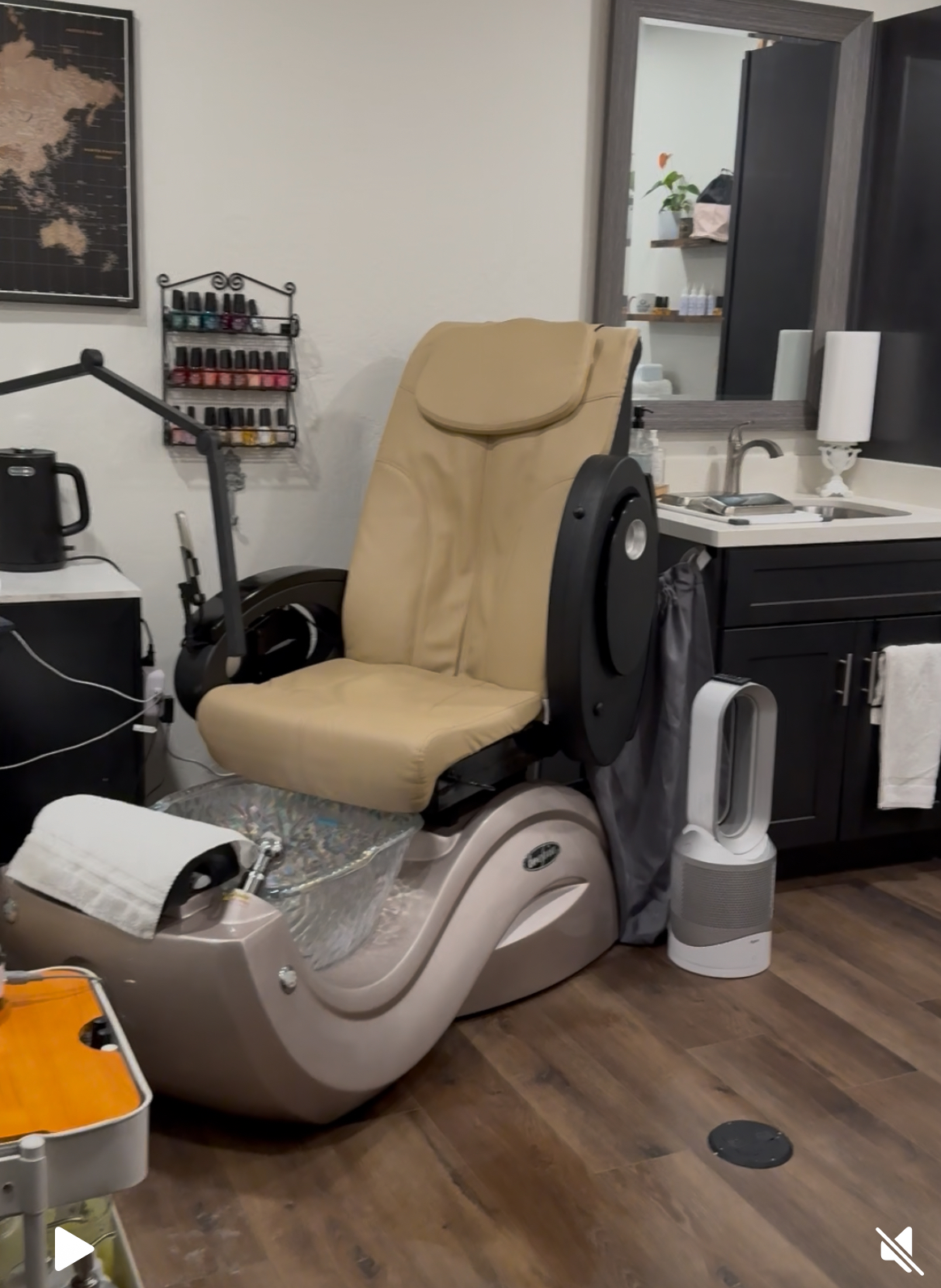
A properly maintained foot spa can be used safely, while a neglected basin or circulating system can harbor microorganisms and biofilm. However, the majority of modern day pedicure tubs use a magnet to circulate the water not tubes. Disposable liners may add a barrier, but they do not replace cleaning and disinfection of the equipment as required by the manufacturer, disinfectant label, and state board.
A Practical Safe-Soaking Protocol
A safe pedicure begins before the client’s feet enter the water and continues after the service is complete.
Screen the Client
Check for open wounds, ulcers, active bleeding, drainage, severe redness, swelling, or other concerns that require postponement or referral.
Prepare the Basin
Use a clean basin or foot spa. Install a new disposable liner when used, and follow the equipment manufacturer’s instructions.
Use Comfortable Water
Use warm—not hot—water. Confirm the temperature with the client, especially when reduced sensation is possible.
Soak With Purpose
Use a limited soak appropriate to the client and service. Alternating feet can maintain softness without prolonged immersion.
Clean and Disinfect
After every client, remove debris, clean all required surfaces, and apply the correct EPA-registered disinfectant for its full labeled contact time.
A Soak Is More Than a Bowl of Water.
When performed appropriately, soaking supports the technical service and the client experience.
Softens Hard Toenails
Temporary softening can make thick or hard nails easier to trim and refine with less force.
Softens Dry Surface Skin
A controlled soak can prepare dry surface skin for conservative exfoliation and moisturizing.
Supports Relaxation
Many clients associate the warm soak with comfort, cleansing, relaxation, and a complete pedicure experience.
What Is Biofilm?
Biofilm is a community of microorganisms attached to a surface and protected by a matrix. It can develop in wet systems that are not adequately cleaned, especially in screens, jets, tubing, filters, and other difficult-to-reach components.
The Environmental Protection Agency warns that foot-spa screens and tubes can collect bacteria and form biofilm. Its guidance emphasizes cleaning and disinfection between clients and nightly, using an EPA-registered hospital disinfectant, and observing the full labeled contact time.
Biofilm prevention requires:
- Following the foot-spa manufacturer’s maintenance instructions
- Removing visible debris before disinfection
- Cleaning screens, jets, bowls, and removable components
- Using an appropriate EPA-registered disinfectant
- Keeping every surface wet for the full label contact time
- Completing required between-client and end-of-day procedures
- Maintaining sanitation records when required
Common Dry-Pedicure Claims Examined
“Dry pedicures are automatically safer.”
Removing water does not remove every source of contamination. Hands, implements, e-file bits, surfaces, towels, products, and improperly handled single-use items can all transmit contamination.
Evaluate the entire infection-control system.
Safety depends on client screening, hand hygiene, cleaning, disinfection, tool handling, product dispensing, intact skin, technique, and compliance with state rules.
“Biofilm makes every foot soak unsafe.”
Biofilm is a legitimate concern in improperly maintained systems. That does not mean every basin or every controlled foot soak is inherently unsafe.
Choose cleanable equipment and maintain it correctly.
Simpler basins and pipeless systems may be easier to access, but every reusable system still requires cleaning and disinfection according to its design and applicable rules.
“A disposable liner eliminates every risk.”
A liner can create a useful barrier, but it can tear, leak, be installed incorrectly, or leave equipment components exposed.
Use liners as an added measure—not a substitute.
Dispose of each liner after one client and complete all cleaning and disinfection required for the basin or spa system.
A Diagnosis Alone Does Not Tell You Everything About the Feet.
Clients with diabetes do not all have the same level of risk. Peripheral neuropathy, reduced circulation, open wounds, active infection, poor healing, and uncontrolled disease can change what is appropriate.
A blanket statement that every person with diabetes must receive the same pedicure protocol is not a substitute for consultation, visual inspection, professional judgment, state scope, and referral when indicated.
Use additional caution when the client reports or displays:
- Reduced sensation or inability to judge water temperature
- Poor circulation or delayed healing
- Open wounds, ulcers, fissures, or drainage
- Active redness, heat, swelling, or unexplained pain
- A physician’s instruction restricting soaking
- Any condition beyond cosmetic salon care
Clients with reduced sensation may not recognize excessive heat. When risk is uncertain, postpone the service and ask the client to consult the healthcare professional managing the condition.
Pay Equal Attention to the Tools That Touch Every Client.
Nippers, pushers, files, e-file bits, towels, work surfaces, and product containers all require appropriate handling.
Reusable implements
Single-use and porous items
Does Every Nail Salon Need an Autoclave?
An autoclave is a sterilization device used in healthcare and other regulated settings. Whether a salon must use one depends on the applicable state or local rules and the services and instruments involved.
Many cosmetology regulations rely on cleaning followed by the use of an EPA-registered disinfectant for nonporous implements. A business should not purchase an autoclave merely because an educator uses fear-based marketing—but it also should not ignore a legal sterilization requirement where one applies.
Before purchasing sterilization equipment:
- Read your state board’s current rules
- Determine which implements and services the rule addresses
- Confirm required testing, maintenance, packaging, and recordkeeping
- Do not call disinfection “sterilization”
- Do not assume equipment alone fixes poor workflow
A Trend Is Not More Important Than the Person in the Chair.
Clients differ in mobility, sensory needs, medical history, comfort preferences, and physical limitations. A professional service should be adapted around the client—not around a social-media trend.
Avoid requiring older or mobility-limited clients to lie prone, twist, or repeatedly reposition.
Ask the client to confirm comfort and use extra caution when sensation may be reduced.
Explain whether the service includes soaking, exfoliation, massage, grooming, and polish before beginning.
A dry service may suit some clients, but it should not be promoted through unsupported claims that water itself is unsafe.
Learn a Complete, Client-First Pedicure System.
STAR NT education helps licensed professionals improve consultation, sanitation, regular and customized pedicures, thick-toenail reduction, ingrown-sidewall cleaning, massage, electric-file use, service planning, pricing, and client retention.
The goal is not to claim one method is appropriate for every person. The goal is to give you the knowledge to select and perform a safe, comfortable cosmetic service within your license.
- Client consultation and contraindication screening
- Cleaning, disinfection, and salon protocols
- Regular, customized, and specialized pedicure techniques
- Thick, curved, lifted, and irregular toenail care
- Ergonomics, pricing, policies, and client retention
- Private supportive Facebook community for eligible graduates
Pedicure Safety Resources
Infection-control decisions should be based on official guidance, the product label, equipment instructions, and your state’s current rules.
Pedicure Soaking and Dry Pedicure FAQ
Is soaking feet during a pedicure safe?
A controlled warm-water soak may be appropriate when the skin is intact, the client has been screened, the equipment is properly maintained, and cleaning and disinfection are completed according to the label, equipment instructions, and state rules.
Does a disposable liner replace disinfection?
No. A single-use liner may provide an additional barrier, but it does not replace any cleaning or disinfection required for the basin, foot spa, removable components, or surrounding surfaces.
Are dry pedicures safer than soaking pedicures?
Not automatically. Dry services eliminate the footbath portion of the procedure, but tools, hands, work surfaces, towels, products, and technique still require proper infection control. Safety depends on the complete protocol.
Can clients with diabetes soak their feet?
Risk varies. Reduced sensation, impaired circulation, open wounds, ulcers, infection, or a healthcare provider’s restrictions may make soaking inappropriate. Screen the client, avoid hot water, do not soak compromised skin, and refer when uncertain.
What causes biofilm in a pedicure spa?
Biofilm can form when microorganisms attach to wet surfaces, especially in components that are not adequately cleaned. Screens, jets, filters, and tubing require careful maintenance according to manufacturer and regulatory instructions.
Does every nail salon need an autoclave?
Requirements vary by jurisdiction. Many cosmetology rules require cleaning and EPA-registered disinfection for nonporous implements, while some places may impose different requirements. Verify the current rules where you practice.
Why do many clients prefer a soaking pedicure?
Many clients enjoy the warmth, relaxation, cleansing experience, and temporary softening of hard toenails and dry surface skin. Preferences vary, so the service should be explained and adapted to the individual.
Water Is Not a Substitute for Sanitation—and Avoiding Water Is Not a Substitute Either.
A safe pedicure comes from client screening, intact skin, proper equipment, accurate disinfectant use, clean implements, skilled technique, and professional judgment.
Professional disclaimer: This page provides general educational information and is not medical or legal advice. Client needs, product labels, equipment instructions, state-board rules, and health risks vary. Nail professionals are responsible for verifying current requirements, screening clients, following manufacturer and disinfectant instructions, remaining within cosmetic scope, and referring clients when a concern is outside their training or license. Clients with diabetes, neuropathy, circulatory problems, wounds, ulcers, infection, or impaired healing should follow guidance from their qualified healthcare professional.